
PLN-101095: Oncology
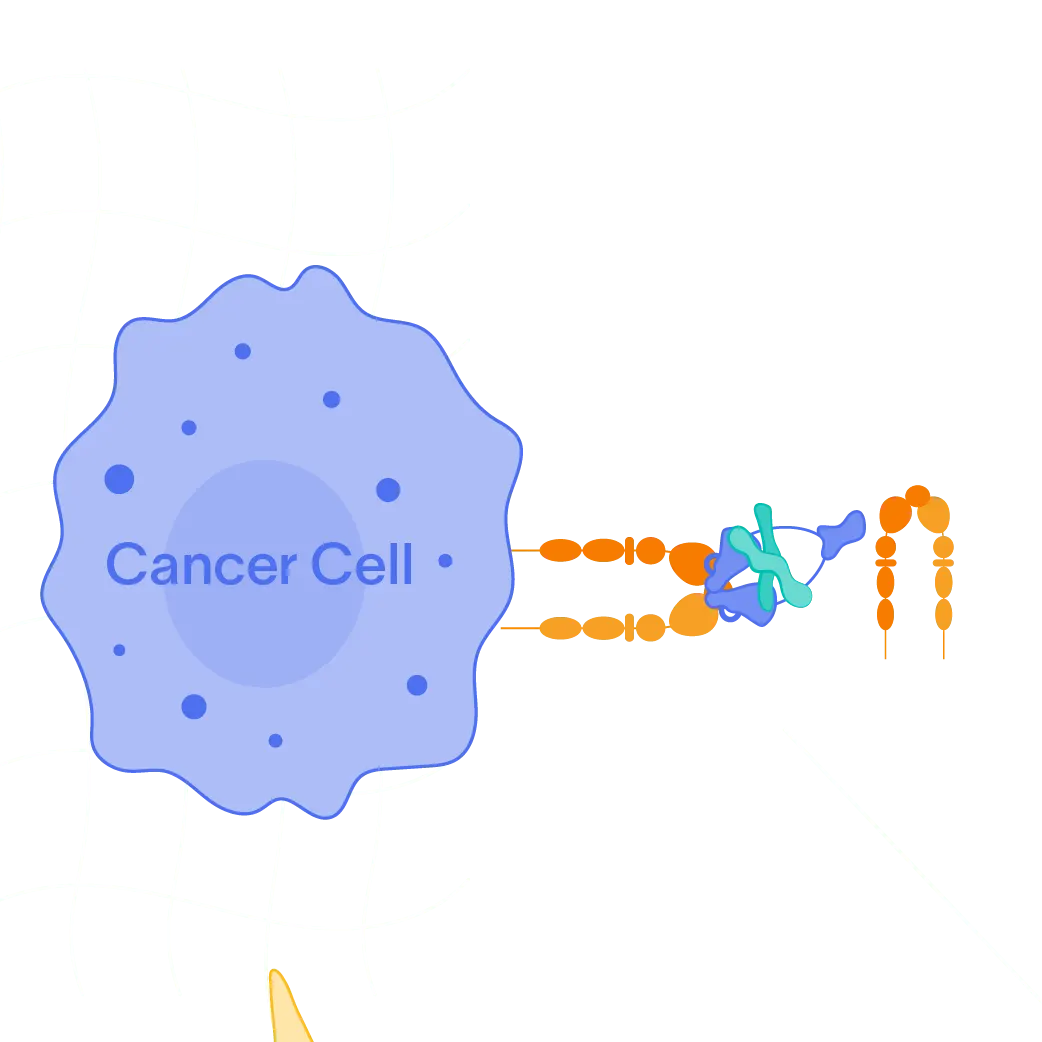
Our oncology program focuses on increasing the sensitivity of “cold” tumors to checkpoint inhibition therapies by blocking αvβ8-mediated TGF-ß activation in the tumor microenvironment.

Our Oncology Program
Over the past several years, the checkpoint inhibitor class of immuno-oncology drugs has changed the way many cancers are treated. Checkpoint inhibitors work to block signals that prevent the body’s immune system from recognizing tumor cells. By blocking checkpoint signals such as PD-1, these drugs could sensitize T-cells, allowing them to recognize and kill tumor cells. While checkpoint inhibitors have led to dramatic improvements in survival rates, there are still a significant proportion of patients who do not respond to the drugs.
One of TGF-ß’s core physiologic roles is an anti-inflammatory effect that it provides in the wound healing process. In the tumor microenvironment, however, certain integrins, such as avß8, can be overexpressed on multiple different cell types, resulting in increased activation and signaling of TGF-ß. This mechanism is becoming increasingly recognized as a potential cause of the resistance to checkpoint inhibitors such as anti-PD-1 therapies seen in many tumors.
Program Highlights
- More than 40 percent of U.S. patients with cancer are estimated to be eligible for checkpoint inhibitors, but less than 13 percent respond to the treatment
- By targeting TGF-ß activating integrins such as avß8 that are upregulated in certain tumors, our goal is to remove the anti-inflammatory effect and, ultimately, sensitizing tumors to checkpoint inhibitors
- In an EMT6 anti-PD-1 resistant tumor mouse model we have shown that our small molecule inhibitors of αvβ8-mediated TGF-ß activation are able to sensitize tumors to anti-PD-1 therapy and extend survival
- PLN-101095, a dual selective inhibitor of αvβ8 and αvβ1 integrins and our lead oncology candidate, was spotlighted as a novel immunotherapy approach at the 2026 American Association for Cancer Research (AACR) 2026 Annual Meeting Highlights Plenary Session
Development Status
- Pliant is conducting a Phase 1a/1b dose escalation/indication expansion trial (NCT 06270706) in patients with solid tumors resistant to immune checkpoint inhibitors
- In April 2026, as part of an oral presentation at AACR, updated data from the Phase 1a portion of this trial was announced with antitumor activity observed with PLN-101095 dosed in combination with pembrolizumab. PLN-101095 was generally well tolerated across all doses tested
- FORTIFY, the Phase 1b indication expansion portion of the trial, is enrolling patients across three cohorts: non-small cell lung cancer (NSCLC), clear cell renal cell carcinoma (ccRCC) and tumors with high tumor mutational burden